

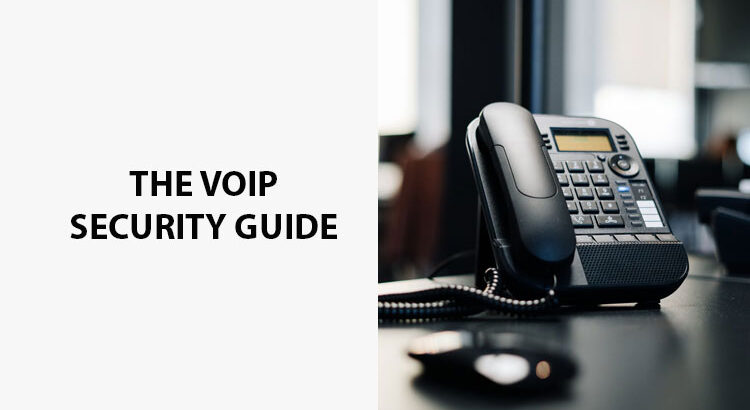
As more businesses upgrade their phone systems to cloud-based services, VoIP security has become just as important as cost savings and features. Since VoIP systems handle sensitive conversations, customer data, and call records, they have become a valuable target for cybercriminals. But with the right safeguards in place, VoIP can be just as safe, if not safer, than traditional phone systems.
So how can you ensure your business’s sensitive data stays protected while using VoIP-based phone systems? In this guide, we’ll cover everything you need to know about VoIP security, including security solutions, best practices, and more! We’re located in Atlanta, but we serve the entire US with VoIP and IT services, including Phoenix, Miami, Boston, and New York.
How Does VoIP Work?
To understand VoIP security and its challenges, you’ll understand how VoIP works. VoIP, which stands for Voice over Internet Protocol, has changed the way businesses make phone calls. Instead of relying on traditional phone lines, VoIP uses the internet to transmit voice calls.
- When you speak into a VoIP phone, softphone app, or headset, your voice is captured by the device’s microphone. VoIP software then converts your voice into digital data packets.
- To make calls more efficient, the digital voice data is compressed using a codec (coder-decoder). The compressed packets are sent over your internet connection.
- The voice packets travel across the internet or a private IP network, often taking the fastest available route.
- If you’re calling a traditional phone number, the VoIP provider routes the call through a gateway that connects internet calls to the PSTN. To the recipient, the call will seem like any other call.
- When the packets reach the recipient, their VoIP system reassembles the data, decompresses it, and converts it back into audio.
- All of this occurs in milliseconds, which is why VoIP calls sound instant and natural when the internet connection is stable.
Why VoIP Security Is Important
With so much business taking place online, cybercriminals have plenty of targets to choose from. Migrating to a VoIP-based phone system offers tons of benefits, like flexible access to your business phone number, but it also provides an opportunity for hackers and scammers. Without proper security, your business risks data breaches, service disruptions, and financial loss. In fact, the average cost of a data breach globally is $4.4 million dollars, a significant sum, especially for smaller businesses.
So why is VoIP security so important? Here are a few reasons you should prioritize the security of your VoIP-based phone system:
- VoIP systems manage sensitive business data every day beyond just voice calls. They often handle customer phone numbers, call recordings, account details, payment information, internal business conversations, and voicemails. If your VoIP system is compromised, attackers can access or intercept this sensitive data, leading to breaches and compliance issues.
- VoIP is a common target for cyberattacks. Because it runs on IP networks, it’s vulnerable to attacks like call interception, toll fraud, and Denial-of-Service (DoS) attacks. Strong VoIP security helps prevent these attacks and keeps communication systems available.
- Many industries are required by law to protect customer communications and data. VoIP security helps businesses meet compliance standards like PCI-DSS (for payment information), HIPAA (for healthcare communications), and GDPR. A security failure can result in fines and legal action, not to mention the loss of your customer’s trust.
- For many businesses, especially sales teams and support centers, phones are mission-critical. If your business phone system is down, no one can work. A VoIP outage caused by a security breach can lead to missed customer calls, lost revenue, and damaged reputation. Security measures can reduce downtime and keep calls flowing.
Traditional Phones vs VoIP
Because VoIP and traditional phone systems operate with vastly different technologies, both require distinct security measures. Traditional phone systems use copper landlines and the Public Switched Telephone Network. Calls travel over dedicated circuits that are physically separate from the Internet. While traditional phones are safer from digital attacks, they aren’t impenetrable.
Traditional phone systems are typically vulnerable to:
- Wiretapping: Wiretapping involves intercepting phone calls by tapping into copper lines inside walls, junction boxes, or outside service points so the attacker can listen in to calls. In many cases, there is no change in call quality, which makes wiretapping hard to detect. It often goes unnoticed until the damage is done.
- PBX hacking: PBX hacking targets on-premise PBX systems, gaining control of the PBX to place unauthorized calls or redirect communications to scam lines. Monitoring for this is limited, and the attack may not be noticed for weeks.
- Social engineering: Social engineering is a type of attack where criminals use deception to trick people into revealing sensitive information like passwords or account numbers. These attacks bypass physical security measures and instead exploit personnel to provide sensitive data.
With traditional phone systems, security depends on physical protection. It’s difficult to audit the system for threats in real time. Plus, there’s no encryption to prevent eavesdropping. Security is usually reactive rather than proactive.
So how does VoIP compare when it comes to security? Many people assume that VoIP is more vulnerable because it operates over the internet. However, with VoIP, you can prevent eavesdropping with end-to-end encryption, monitor your system in real-time, provide secure remote access for distributed teams, and use advanced authentication and access controls to protect the system from data breaches. While it does have security risks, a well-configured VoIP system is actually more secure than a traditional phone system.
The Biggest VoIP Security Threats
Tons of businesses have switched to VoIP to take advantage of its flexibility, cost savings, and advanced features. Because VoIP runs over the internet, it also faces unique security risks, including:
- Toll fraud: Toll fraud is one of the most expensive VoIP security threats. Hackers gain access to a VoIP system, using it to place high-cost international or premium-rate calls, leaving the business with a huge bill.
- Eavesdropping: Attackers can intercept unencrypted traffic and listen to conversations, exposing sensitive business and customer information.
- Denial-of-Service (DoS) attacks: In a DoS attack, cybercriminals flood the VoIP network with traffic, overwhelming the system and preventing legitimate calls from getting through.
- Social engineering: Attackers may target VoIP users with vishing (voice phishing) or attempt to steal login credentials through deceptive calls or messages.
- Malware: Attackers infiltrate computers, phones, or softphones through malware so they can record calls or steal credentials.
- Caller ID spoofing: Callers deliberately falsify the phone number and/or name that appears on the recipient’s caller ID. The goal is to make the call look like it’s coming from a trusted source.
Top VoIP Security Solutions
While VoIP phone systems are vulnerable to cyberattacks, there are a number of VoIP security solutions that can protect your business from most of these threats. The top VoIP security solutions to consider when configuring your phone system include:
- Encryption: Encryption protects your voice traffic and signaling data from prying ears. SRTP (Secure Real-Time Transport Protocol) encrypts the audio of calls, while TLS (Transport Layer Security) encrypts the call setup and signalling. With encryption in place, the data is scrambled so attackers can’t understand it even if they manage to eavesdrop.
- Firewalls: Firewalls control traffic entering or leaving your network. Session Border Controllers (SBCs) are specialized firewalls designed specifically for VoIP. They block unauthorized access, protect against DoS attacks, and ensure interconnection with multiple networks.
- Network segmentation: Separate VoIP traffic from general network traffic using a VLAN (Virtual LAN) to minimize the risk of cyberattacks. If one part of your network is compromised, attackers cannot easily access your VoIP system.
- Intrusion detection and provincial systems: IDS/IPS tools monitor network traffic in real time and can identify suspicious activity, preventing threats from evolving into breaches.
Top Providers
If you’re ready to upgrade your business phone system to VoIP, the first step is to find a good provider. Here are some of the top providers to choose from:
- RingCentral: One of the most popular options on the market, RingCentral offers unified communications (think voice calling, video messaging, and team collaboration in one platform) with tons of advanced features. They have a number of security accreditations, including ISO27001, PCI, and SOC2, and offer strong security features.
- Nextiva: Nextiva offers a powerful VoIP platform with advanced call analytics, customer management tools, and excellent support. Plus, they are committed to security, utilizing encryption, security certifications, and secure data centers to keep your data safe.
- 8×8: If you need a VoIP provider with a global reach, 8×8 may be what you’re looking for. They offer unlimited calling in up to 48 countries and have a number of global accreditations for security, including GDPR, SOC2, and more.
- Zoom Phone: If your business uses Zoom’s video platform, Zoom Phone is a logical choice for your business phone system. The Zoom Phone platform works seamlessly with Zoom’s video system and offers competitive pricing and easy setup. They offer end-to-end encryption and two-factor authentication and have security accreditations like SOC2, GDPR, and more.
VoIP Security in Healthcare
VoIP has become increasingly popular in healthcare settings. From appointment reminders to telehealth consultations, VoIP enables providers to offer better care to patients. However, it also introduces some serious security and compliance responsibilities. Because healthcare organizations handle highly sensitive data, VoIP security is critical to protecting patient privacy.
If your office is required to comply with HIPAA, you’ll need to configure your VoIP system correctly to keep patient communications safe. This typically includes call encryption, secure access controls, security measures for remote access, and call logging/auditing. You will also need to have your VoIP provider sign a Business Associate Agreement (BAA). This ensures the provider meets HIPAA security standards, shares responsibility for data protection, and follows breach notification requirements.
Best Practices in VoIP Security
Prioritizing VoIP security is essential to prevent fraud, data breaches, and service disruptions. Expert-recommended best practices include:
- Secure access controls: Weak login credentials (passwords) are a top attack vector in a VoIP system. Using complex, unique passwords and requiring employees to change them frequently can protect your business from cyberthreats.
- Regular updates: Keep your software updated to patch security vulnerabilities and protect the phone system from new threats.
- Employee training: Since people are often the weakest link, keep employees up-to-date on the latest social engineering threats. Train them to report suspicious activity and follow secure Wi-Fi practices.
- Enable call encryption: Make sure call encryption is on by default to protect conversations from interception.
- Use VPNs: VoIP allows remote workers to access the business phone system from home, but poses a risk if not properly secured. Make sure employees avoid public or unsecured Wi-Fi and route connections through a secure VPN (Virtual Private Network) to encrypt calls.
- Activate Wi-Fi encryption: Set up WPA2 for your company’s Wi-Fi and make your employees use it for their own networks.
- Limit call permissions: Disable international calling if your company doesn’t make regular calls abroad. Set call spending limits, and restrict outbound calls by role or department.
- Monitor calls: Continuous monitoring can help you detect suspicious behavior early. Watch for spikes in call volume, calls at unusual times, and repeated failed login attempts. Set alerts so you can address issues immediately.
- Utilize role-based permissions: Not every user needs full access. Limit admin privileges, assign roles based on job function, and review access regularly to reduce insider threats and limit damage from compromised accounts.
- Choose a secure provider: Look for a VoIP provider that offers built-in encryption, fraud prevention tools, compliance support, and regular security updates to ensure overall VoIP security.
VoIP Security Final Thoughts
With cyberattacks on the rise, VoIP security is a priority for businesses of all sizes. By choosing a secure provider and configuring your system properly, you can ensure your communications remain protected from cybercriminals.
Finding a provider that takes security seriously is essential. At OneStop Communications, we can help. We’ll do the hard work of auditing your organization and evaluating potential providers, offering your personalized recommendations that will fit your budget and your needs. If you’re ready to upgrade your phone system with our expert help, contact OneStop Communications today!
